
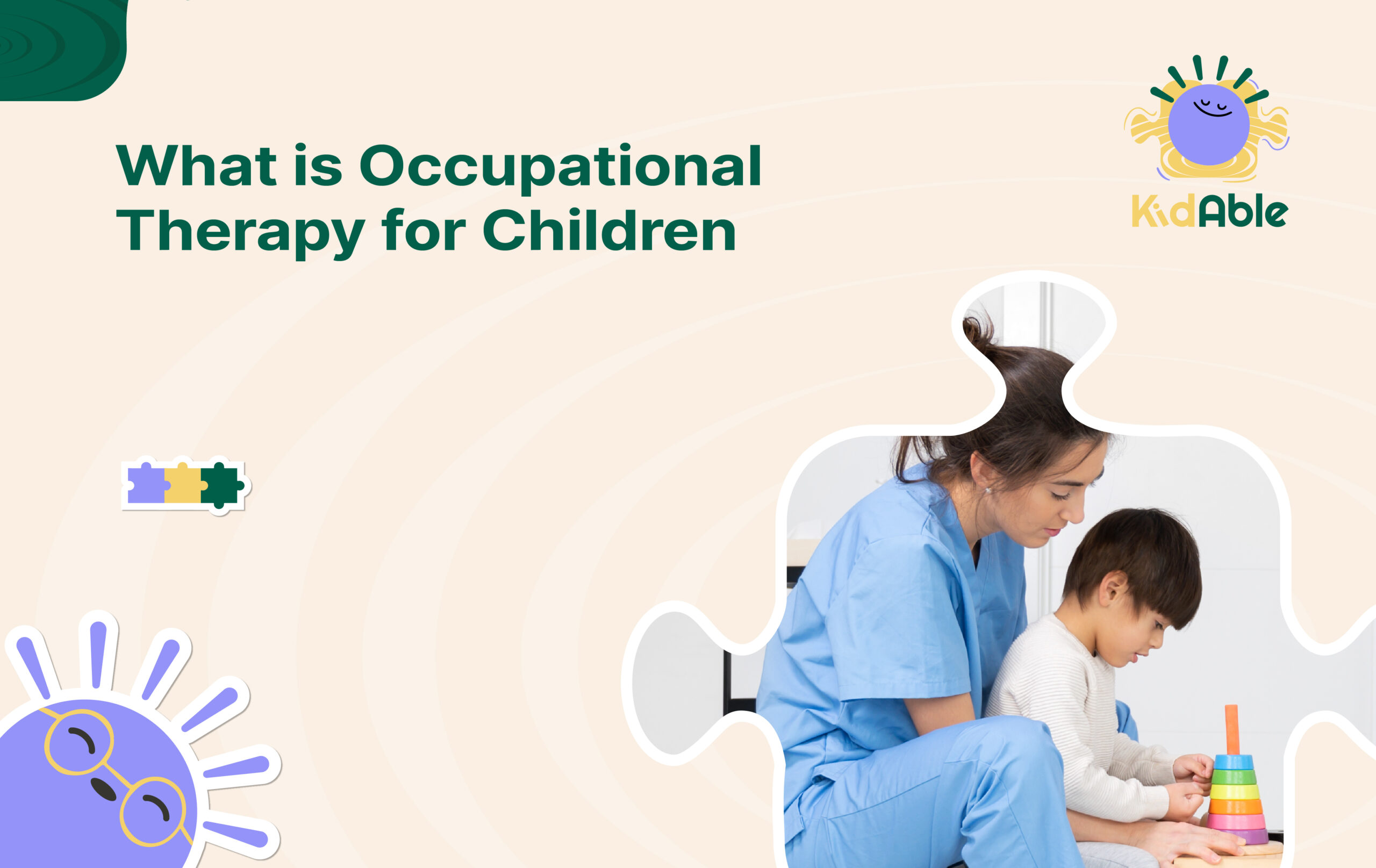
Occupational therapy for children is often described as a gentle bridge that connects a child’s everyday experiences with the skills they need to feel steady, confident, and included. Many families discover it at moments when their child seems to be trying so hard to navigate the world around them; tiny tasks like getting dressed, using a pencil, joining play, or responding to sounds or textures can feel unexpectedly overwhelming. A warm, specialized approach like this gives children space to understand their bodies, their senses, and their emotions at a pace that feels comforting and respectful.
Key Takeaways
- Occupational therapy for children focuses on nurturing functional skills through play, sensory work, and meaningful daily activities.
- It supports children with diverse developmental profiles, including those seeking occupational therapy for children with autism.
- The approach strengthens independence, emotional regulation, social participation, and school readiness.
- Evidence based techniques guide every interaction, ensuring families feel informed, supported, and involved.
- KidAble’s therapists use child-led methods, sensory integration work, motor skill development, and parent coaching to build long-term progress.
What is occupational therapy?
Occupational therapy focuses on supporting children as they develop the skills needed for daily living. These skills often look simple from the outside, yet they require complex coordination, sensory awareness, emotional grounding, and motor planning. It focuses on how a child interacts with their environment, how they respond to sensory input, how they move, and how they manage self-care or school tasks. The goal is to gently strengthen underlying foundations, not force skill acquisition.
Occupational therapy is a way of truly understanding the child for the first time. Instead of viewing challenges as limitations, we look at them as clues. For example, a child who avoids certain textures might be telling us that their sensory system is working extra hard, a child who struggles with handwriting may actually need proprioceptive support rather than repeated practice, and a child who becomes overwhelmed in busy environments may need co-regulation strategies before social demands are introduced. Each layer is explored with patience, warmth, and science-backed methods.
What does occupational therapy treat for children and adolescents?
Occupational therapy for children and adolescents addresses the abilities required for meaningful daily participation, not just developmental traits observed on the surface. Therapists begin by understanding how a child processes sensory information, coordinates movement, manages attention, and responds to everyday demands. These areas are closely interconnected; when one system struggles, the others often work harder to compensate. Instead of assuming a child is simply distracted, an occupational therapist looks for specific neurological or motor foundations that may be influencing these behaviours.
A detailed sensory evaluation helps determine whether a child experiences sensations more intensely, notices them less or finds it difficult to organize incoming information. This understanding guides targeted strategies for activities like bathing, feeding, handwriting, classroom transitions, and play interactions. Therapists also study the child’s motor planning abilities, observing how they initiate movements, sequence steps, and adjust their bodies in space.
For adolescents, the scope expands to executive functioning, time management, study routines, problem solving, and coping tools that support growing independence. Each recommendation is grounded in clinical reasoning, ensuring that families understand why a particular approach is chosen and how it supports long-term participation.
Occupational therapy for children with autism
When families explore occupational therapy for children with autism, they often carry questions filled with tenderness, hopes, and the desire to truly understand their child’s world. Autism can influence how a child communicates, senses, moves, and relates to their environment. Occupational therapy offers structured yet gentle support by acknowledging these differences without trying to erase them.
Therapists trained in autism aware approaches focus on sensory integration, co-regulation, motor planning, social engagement, and adaptive strategies for everyday routines. Research consistently shows that early and responsive OT interventions can improve functional participation, foster emotional comfort, and strengthen meaningful connections in a child’s life. Sessions often look like thoughtful play, carefully paced, and intentionally designed to build trust and curiosity.
Benefits of Occupational Therapy for Autistic Children
Occupational therapy focuses on how sensory, motor, and emotional systems work together in daily life. Families often notice early shifts such as steadier posture, calmer transitions, or clearer engagement during play. These meaningful changes become gentle occupational therapy examples that show how intentional intervention supports comfort and participation for autistic children.
Enhanced Sensory Processing
Many autistic children experience sensations in heightened or reduced ways, making everyday environments feel unpredictable. Occupational therapy strengthens sensory processing by introducing structured sensory experiences that help children understand what their bodies need, whether that is deep pressure, movement, tactile exploration, or calming visual input. Over time, this nurturing approach builds a more regulated nervous system. Children often begin to tolerate textures they once avoided, remain in environments that previously felt overwhelming, and participate more comfortably in tasks that require sustained attention.
Improved Motor Skills
Motor skill development in autistic children can vary widely, with some children showing differences in coordination, balance, or hand strength. Occupational therapy uses playful, purposeful exercises that strengthen fine and gross motor pathways. Rather than repetitive drills, therapists weave motor work into engaging activities that hold the child’s interest. As motor planning improves, children often find handwriting easier, climbing safer, self care tasks more manageable, and physical play more enjoyable.
Increased Independence in Daily Activities
Daily activities like brushing teeth, dressing, or managing mealtime routines can feel overwhelming when sensory and motor systems are working hard. Occupational therapy breaks these tasks into meaningful steps while honouring the child’s pace. Independence grows not from pressure but from understanding, repetition, and compassionate guidance. Parents frequently notice that children begin initiating routines more confidently, expressing their preferences, and completing tasks with reduced frustration.
Social Skills Development
Social interaction is deeply emotional and unpredictable, which can make it challenging for autistic children. Occupational therapists support children by building foundational capacities like joint attention, shared joy, turn taking, and reading non verbal cues. These experiences emerge naturally through play. As children feel more secure in their bodies and sensory worlds, social participation becomes less demanding and more meaningful.
Adaptive Strategies for Coping
Coping strategies are essential for navigating moments that feel overwhelming. Occupational therapy teaches children how to recognise their internal cues, seek comfort, and use tools like breathing techniques, visual supports, or movement routines. These strategies create a sense of predictability in situations that may otherwise feel confusing. Over time, children gain a stronger sense of agency, knowing they have ways to soothe themselves when emotions rise.
Increased Self Esteem
When children understand their bodies better, feel capable in daily tasks, and experience success in play, their confidence naturally grows. Occupational therapy celebrates every small step, acknowledging the effort behind each moment of progress. Children begin to see themselves as capable learners, parents witness emerging pride, and families share in joyful milestones. This emotional strengthening becomes a quiet yet powerful part of long term wellbeing.
Facilitation of Play and Leisure Skills
Play is the language of childhood, a space where learning happens without pressure. For autistic children, play may require support, especially when sensory sensitivities or motor challenges influence how they engage. Occupational therapy design play experiences that gently stretch a child’s abilities while keeping the environment comforting and predictable. As play skills expand, children explore new interests, connect more easily with peers, and enjoy richer sensory and imaginative experiences.
Contributions to Academic Success
Academic participation depends on many underlying skills, including attention, organisation, motor coordination, and the ability to stay regulated in a busy classroom. Occupational therapy strengthens these foundations by creating personalised strategies that fit the child’s learning style. Teachers often observe improvements in handwriting, seating tolerance, task completion, and emotional readiness for learning. This doesn’t promise perfect outcomes, but it offers children the tools they need to feel seen at school.
Reduction in Challenging Behaviors
Behaviors that appear challenging are often expressions of unmet sensory, emotional, or communicative needs. Occupational therapy views these behaviours with compassion, exploring what the child might be trying to express. By improving regulation, refining motor planning, and supporting communication, therapists reduce the stressors that contribute to these moments. Families often report calmer routines, smoother transitions, and greater understanding of what their child needs.
Empowerment of Individuals and Families
Occupational therapy is not just for the child; it supports the entire family ecosystem. Parents learn to recognize sensory cues, understand why certain activities feel harder, and use strategies that match their child’s unique needs. This shared knowledge strengthens bonds, reduces uncertainty, and builds a home environment where the child feels understood.
Difference between occupational therapy and physical therapy
Although occupational therapy and physical therapy share the goal of improving a child’s quality of life, they focus on different areas. Physical therapy emphasizes strength, mobility, and movement patterns related to the muscles and joints. Occupational therapy centres on functional participation, sensory processing, emotional regulation, and fine motor skills required for everyday tasks. A child might see a physical therapist to improve balance for walking, while an occupational therapist supports the same child in using that balance to climb playground equipment, sit comfortably in class, or engage in purposeful play. Both are valuable, and many children benefit from having both professionals on their team.
How KidAble’s occupational therapy helps children thrive
KidAble’s approach to occupational therapy for children is rooted in warmth, respect, and expert care. We take time to truly know each child, observing their sensory responses, emotional patterns, motor abilities, and communication styles. Each session unfolds at a pace that honours the child’s readiness.
We integrate sensory integration therapy, fine and gross motor development, play based learning, and family coaching. Whether parents seek occupational therapy for children with autism or for broader developmental needs, the focus remains steady, creating pathways that nurture comfort and independent participation. Families often share that their children appear calmer, more expressive, more coordinated, and more open to new experiences as sessions progress.
Conclusion
Occupational therapy invites children into a world where their needs are interpreted with precision, their pace is honoured, and their strengths are used as anchors for progress. For many families, this becomes a quiet turning point where daily routines begin to make sense again. Clinically grounded practices such as sensory modulation work, motor strengthening, environmental adaptations, and functional task grading allow therapists to reshape challenges into achievable steps. These are concrete occupational therapy examples that show families how targeted intervention can influence handwriting fluency, dressing independence, emotional steadiness, or sustained participation in classroom tasks.
When guided by thoughtful professionals, children learn not only new skills, but an internal sense of trust and understanding that their bodies and environments can work together rather than against them. KidAble remains committed to offering this level of care, combining evidence-based reasoning with gentle human connection to create spaces where children and families feel understood, supported, and genuinely hopeful.
FAQs
At what age can a child start occupational therapy?
Children can begin occupational therapy as early as infancy when developmental concerns first appear. Early support can create meaningful long-term benefits.
How long does occupational therapy take to show progress?
Progress varies widely; some children show changes within weeks, while others grow steadily over months. The timeline depends on consistency, underlying needs, and developmental profiles.
Is occupational therapy only for autistic children?
No, occupational therapy for children and adolescents supports a broad range of needs, including motor coordination, sensory processing, emotional regulation, and school readiness.
Can parents be involved in sessions?
Absolutely, parent participation strengthens outcomes and creates a unified support system at home.
Is occupational therapy evidence based?
Yes, it is grounded in neuroscience, motor learning research, sensory integration science, and developmental psychology to ensure safe, effective care.