
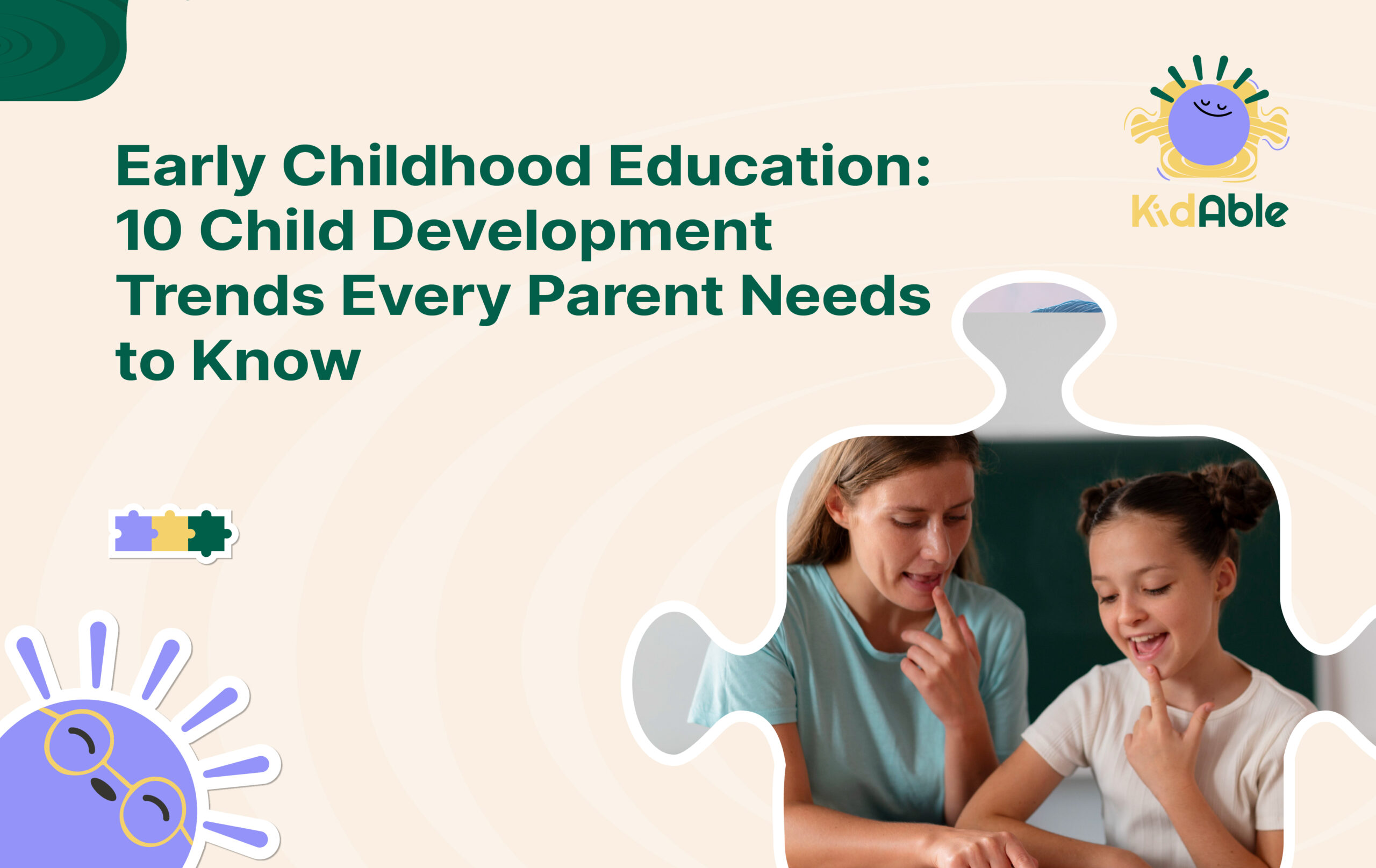
The early years of a child’s life shape the foundation for learning, communication, and emotional well-being. Families today are more informed than ever about early childhood education, and with this awareness comes a growing interest in understanding how child development unfolds in real environments such as homes, classrooms, and therapy settings. In cities like Gurugram, families are increasingly exploring structured supports such as speech therapy, developmental assessments, and play-based learning to strengthen the earliest stages of growth.
As research in neuroscience and education continues to evolve, several new trends are shaping how parents, educators, and therapists approach early learning. These trends do not replace traditional caregiving or schooling; instead, they expand the ways in which children experience language, social interaction, and cognitive development during their earliest years.
Key Takeaways
- Early childhood education plays a central role in strengthening emotional, social, and cognitive child development during the early years.
- Modern approaches now integrate therapies such as speech therapy into early learning environments to support communication growth.
- Emerging trends include personalized learning for kids, technology-driven tools such as AI learning apps for children, and structured approaches to social skills development in children.
- Parents and educators are increasingly paying attention to developmental milestones for toddlers while incorporating play-based sensory learning activities.
- KidAble’s developmental services in Gurugram combine therapy, family guidance, and educational insight to support holistic early learning.
Why Early Childhood Education Matters for Child Development
Early childhood education is far more than academic preparation. It shapes how children communicate, solve problems, regulate emotions, and form relationships with others. During the first six years of life, the brain develops rapidly; neural connections responsible for language, movement, and emotional regulation are built through everyday experiences.
This is why the connection between early childhood education and child development is so widely emphasized by researchers and developmental specialists.
In Gurugram especially, families increasingly integrate early learning with therapeutic support such as speech therapy, occupational therapy, and developmental programs. These approaches recognize that learning does not happen only in classrooms; it happens through play, conversation, exploration, and relationships. When early learning environments support these experiences, children develop confidence and curiosity that continues into later schooling.
Trend 1: Personalized Learning for Kids
One of the most important trends shaping early childhood education is personalized learning for kids. Rather than expecting every child to learn through identical teaching methods, educators now recognize that learning pathways vary based on curiosity, sensory preferences, communication styles, and developmental pace. This shift acknowledges that children are not passive recipients of information; they are active explorers whose learning grows through engagement and meaningful interaction.
Personalized learning environments encourage teachers and therapists to adapt lessons so they reflect the child’s interests and strengths. When children feel seen and understood in their learning journey, motivation naturally increases. This approach strengthens child development by supporting emotional confidence alongside cognitive growth.
How Personalized Learning Supports Child Development
Through personalized learning for kids, activities are adapted to each child’s pace and interests. A child fascinated by music might explore language through rhythm, rhyme, and singing games. Another child might develop vocabulary through building activities, puzzles, or storytelling. Personalized approaches also allow educators to adjust sensory inputs and communication styles so children remain comfortable and engaged.
These tailored learning experiences strengthen child development by aligning educational methods with natural curiosity. Over time, children become more confident learners who approach challenges with curiosity instead of hesitation.
Trend 2: Integration of Speech Therapy into Early Learning
Communication forms the backbone of social, emotional, and cognitive development. Increasingly, speech therapy is becoming an integrated part of early childhood education rather than a separate clinical service. Schools and developmental centers are recognizing that communication growth happens best when it is woven naturally into everyday learning experiences.
Speech Therapy and Communication Growth
Through structured speech therapy, children strengthen articulation, vocabulary, expressive language, and listening skills. Therapists often use play-based activities that mirror classroom learning environments. This integration ensures that children practice language skills during storytelling, group play, music sessions, and daily routines.
When speech therapy becomes part of early learning environments, children gain more opportunities to practice communication. These experiences support child development by improving confidence in conversations, participation in group activities, and the ability to express ideas clearly.
Trend 3: Social Skills Development in Children
Another major shift in early childhood education focuses on social skills development in children. Emotional intelligence, empathy, and cooperation are now seen as essential life skills that shape future relationships and learning success.
Building Empathy and Cooperation
Programs that emphasize social skills development in children teach children how to recognize emotions, share resources, take turns, and resolve conflicts peacefully. Through guided play and group interaction, children practice listening, understanding others’ perspectives, and expressing their own feelings respectfully.
These experiences strengthen overall child development because social confidence directly influences academic engagement and emotional well-being. Children who feel socially secure are more likely to participate actively in classroom activities and form positive peer relationships.
Trend 4: AI Learning Apps for Children
Technology is increasingly influencing early childhood education, introducing tools such as AI learning apps for children. These applications use adaptive algorithms to adjust educational content according to a child’s responses, allowing learning experiences to feel interactive and personalized.
Responsible Use of Educational Technology
AI learning apps for children can introduce vocabulary development, storytelling prompts, and problem-solving challenges through engaging visual and audio interactions. When used thoughtfully and in moderation, these tools can reinforce foundational academic skills and strengthen attention span.
Experts emphasize that digital tools should complement—not replace—human interaction. Real conversations, imaginative play, and social engagement remain essential for healthy child development. Technology works best when it supports these experiences rather than substituting them.
Trend 5: Positive Parenting Techniques
Modern early childhood education recognizes that learning extends far beyond classrooms. Parenting styles strongly influence a child’s emotional resilience, communication patterns, and behavioral regulation. This is why positive parenting techniques are increasingly discussed alongside educational strategies.
Encouraging Emotional Regulation
Positive parenting techniques emphasize empathy, respectful communication, and consistent routines. Instead of focusing on punishment, caregivers guide children toward understanding their emotions and developing constructive responses.
When parents practice emotional validation and supportive dialogue, children learn how to identify feelings, manage frustration, and communicate their needs effectively. These parenting approaches strengthen family relationships while nurturing healthy child development.
Trend 6: Monitoring Developmental Milestones for Toddlers
Understanding developmental milestones for toddlers allows parents to observe how children grow across language, motor, social, and emotional domains. These milestones provide helpful guidance about the typical sequence of development during the early years.
Why Milestones Matter
Tracking developmental milestones for toddlers allows caregivers and professionals to notice patterns of progress or areas where additional support might be useful. Milestones do not represent strict deadlines; instead, they offer a framework that helps families understand how child development typically unfolds.
When parents stay aware of these developmental indicators, they can seek timely guidance from pediatricians, educators, or developmental specialists if concerns arise.
Trend 7: Sensory Learning Activities
Young children naturally explore the world through movement, sound, touch, and visual stimulation. Because of this, sensory learning activities have become a core part of modern early childhood education programs.
Sensory Experiences and Brain Development
Activities such as water play, textured materials, movement games, and sensory bins stimulate multiple areas of the brain simultaneously. These sensory learning activities strengthen coordination, curiosity, attention, and emotional regulation.
Sensory exploration supports child development by allowing children to process information through multiple channels. This multisensory approach improves engagement and creates deeper learning experiences.
Trend 8: Play-Based Learning
Play is not simply recreation; it is one of the most powerful learning tools available in early childhood education. Through play, children explore ideas, test problem-solving strategies, and build social relationships.
Learning Through Exploration
During imaginative play, storytelling, building, and role-playing activities, children practice communication, cooperation, and creative thinking. These experiences allow them to explore new ideas in a safe environment while developing emotional resilience.
Play-based environments nurture child development by encouraging curiosity and experimentation. Children learn best when they are actively engaged in exploration rather than passively receiving information.
Trend 9: Early Intervention and Developmental Services
Growing awareness of developmental science has led many families to explore early intervention programs that combine education with therapy. These services focus on strengthening communication, learning abilities, and emotional regulation during the earliest years of life.
Early Intervention at KidAble
KidAble in Gurugram offers developmental services that integrate speech therapy, occupational therapy, and learning support within structured programs for young children. These services ensure that differences in communication, learning, or sensory processing are addressed early, allowing children to grow with confidence.
By combining therapy with educational strategies, KidAble supports children in developing stronger communication skills, improved sensory regulation, and greater independence in everyday routines.
Trend 10: Collaboration Between Parents and Educators
The final trend shaping early childhood education is the growing partnership between families and educators. When caregivers and teachers share insights and strategies, children experience more consistent and supportive learning environments.
Building a Shared Learning Environment (h3)
When parents and professionals collaborate, children benefit from coordinated communication strategies, learning activities, and emotional support systems. Families reinforce classroom learning at home while educators adapt lessons based on a child’s interests and developmental profile.
This partnership strengthens trust and ensures that every aspect of a child’s learning environment contributes to healthy child development.
Conclusion
The future of early childhood education is rooted in collaboration, personalization, and scientific understanding of child development. From speech therapy and personalized learning for kids to technology tools like AI learning apps for children, these emerging trends reflect a shift toward more responsive and inclusive learning environments.
For families in Gurugram, centers like KidAble continue to integrate these insights into their developmental programs, creating spaces where communication, emotional well-being, and curiosity grow together. When early learning environments respect individuality and nurture exploration, children develop the confidence and skills needed to thrive in school and beyond.
FAQ
What is early childhood education and why is it important?
Early childhood education refers to structured learning experiences that support cognitive, emotional, and social child development during the early years of life.
How does speech therapy support early childhood education?
Speech therapy strengthens communication skills, allowing children to participate more confidently in learning and social interactions.
What are developmental milestones for toddlers?
Developmental milestones for toddlers are age-based indicators that show how children typically develop language, motor skills, and social behaviors.
What role do sensory learning activities play in child development?
Sensory learning activities stimulate brain development by engaging multiple senses and encouraging exploration.
Are AI learning apps for children effective?
When used responsibly and alongside human interaction, AI learning apps for children can reinforce language learning and problem-solving skills.