
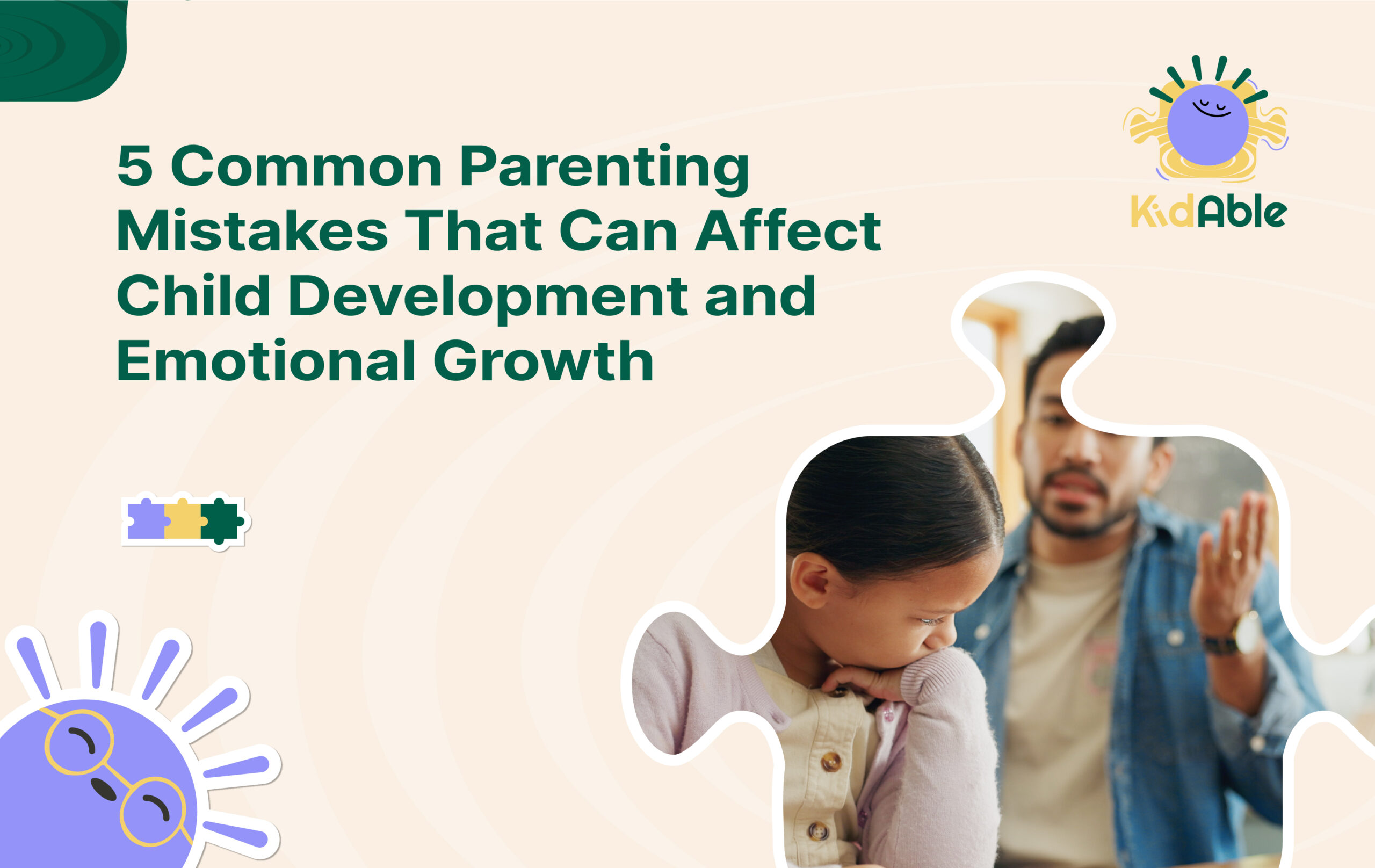
Parenting often comes with constant decision making, emotional pressure, and the desire to do what feels right for a child. Most parents are not trying to be perfect; they are trying to respond with care, protection, and love. At the same time, certain parenting patterns can unintentionally influence how children process emotions, build confidence, communicate, and respond to the world around them.
Understanding parenting mistakes that affect child development is not about blaming parents or creating guilt. It is about recognising how everyday interactions shape emotional safety, learning, and behaviour over time. Early childhood is a period of rapid growth, and children learn not only through instruction, but also through observation, emotional connection, and repeated experiences.
The good news is that parenting patterns can evolve. Awareness, consistency, and support can create meaningful changes that strengthen emotional connection and support healthier development across childhood.
Key Takeaways
- Understanding parenting mistakes that affect child development allows families to build healthier emotional environments
- Many common parenting mistakes are unintentional and shaped by stress, pressure, or lack of support
- Early relationships strongly influence emotional development in early childhood
- Awareness around overparenting effects on children can support independence and confidence
- Understanding how does parenting affect child development supports healthier communication, emotional regulation, and connection
How Does Parenting Affect Child Development
The way children are spoken to, comforted, guided, and emotionally responded to shapes how they understand themselves and others. This is why questions around how does parenting affect child development are deeply connected to emotional growth, communication, learning, and behaviour.
During early childhood, the brain develops rapidly through repeated experiences and relationships. Positive interaction, emotional responsiveness, and predictable routines support emotional regulation and confidence. In contrast, environments that feel highly critical, inconsistent, emotionally unavailable, or overly controlling may affect how children process emotions and relationships over time.
Understanding child development stages and child brain development ages 1 to 5 can help parents respond with more awareness. At these stages, children are learning emotional regulation, social understanding, language, independence, and problem solving. Parenting approaches during these years often leave long lasting emotional patterns.
Common Parenting Mistakes That Affect Child Development
Every parent makes mistakes. Parenting is not about getting everything right at all times, especially in environments shaped by stress, emotional exhaustion, work pressure, and constant decision making. However, certain patterns can repeatedly affect communication, emotional safety, and developmental growth if they continue over time.
Children learn through repeated emotional experiences. The way conflict is handled, how emotions are responded to, and how consistently boundaries are maintained all shape how children understand relationships, self worth, and emotional regulation. Many common parenting mistakes are not intentional; they often develop gradually through overwhelm, generational patterns, or lack of support.
Understanding these patterns early does not mean blaming parents. It creates an opportunity to build more emotionally responsive interactions that support healthier communication, stronger attachment, and long term emotional growth across different child development stages.
1. Dismissing or Minimising Emotions
One of the more common parenting mistakes that affect child development is unintentionally dismissing a child’s emotional experience. Statements such as “you are fine,” “stop crying,” or “that is not a big deal” are often said with the intention of calming the child, but they can sometimes communicate that emotions are inconvenient or unsafe to express.
During emotional development in early childhood, children are still learning how to identify, understand, and regulate emotions. When feelings are repeatedly minimised, children may begin suppressing emotional expression rather than learning how to process it.
Supporting emotions does not mean agreeing with every behaviour. It means acknowledging the child’s internal experience while still guiding boundaries calmly and consistently.
2. Overprotecting or Overparenting
Many parents act from a place of protection, especially in today’s fast paced and high pressure environment. However, ongoing overprotection can influence independence, confidence, and problem solving abilities over time.
Understanding overparenting effects on children is important because children develop resilience by practicing manageable challenges. When adults constantly intervene, solve problems immediately, or prevent all discomfort, children may struggle to tolerate frustration, uncertainty, or failure.
These patterns are sometimes seen during transitions across child development stages, where children are expected to gradually build autonomy. Allowing children to try, make mistakes, and recover with support strengthens emotional confidence.
3. Inconsistent Boundaries and Responses
Children rely heavily on predictability to feel emotionally safe. When rules, expectations, or emotional responses change frequently, children may become confused about what is expected of them.
One day a behaviour may be ignored, while another day it may receive a strong reaction. Over time, inconsistency can affect emotional regulation and behavioural understanding.
Many common parenting mistakes are rooted in exhaustion, stress, or emotional overload rather than intention. However, consistency remains important because children learn patterns through repetition.
Clear communication, calm boundaries, and emotionally regulated responses support trust and stability within the parent child relationship.
4. Using Shame or Fear to Control Behaviour
Some parenting approaches rely heavily on shame, fear, comparison, or punishment to change behaviour. While these approaches may stop behaviour temporarily, they can also affect emotional security and self esteem over time.
Understanding bad parenting effects on child development includes recognising how repeated criticism or humiliation can shape a child’s internal self perception. Children may begin associating mistakes with rejection rather than learning.
Guidance rooted in connection and emotional safety tends to support healthier behavioural understanding in the long term.
This is an important part of understanding what not to do as a parent, especially during sensitive stages of emotional and social development.
5. Ignoring Emotional Connection During Daily Routines
Modern family life often becomes highly task focused. Between school routines, work schedules, activities, and screen time, emotional connection can unintentionally become limited.
Children do not only need instruction and structure. They also need consistent emotional presence. Short moments of connection during meals, bedtime, play, or conversation strongly influence attachment and emotional wellbeing.
Understanding how to raise emotionally healthy children often begins with simple, emotionally responsive interaction. Small moments of attunement repeated consistently build emotional security over time.
Emotional Development in Early Childhood
Understanding emotional development in early childhood is essential because emotions influence behaviour, communication, learning, and relationships.
During early development, children are not born with emotional regulation skills already developed. They learn these skills gradually through repeated co regulation with caregivers. This means children often borrow emotional calm from adults before they learn to regulate independently.
Across child brain development ages 1 to 5, the brain is building neural pathways connected to stress response, emotional understanding, memory, and social interaction. Supportive emotional environments strengthen these pathways in meaningful ways.
Children who experience emotionally responsive interaction are often better able to identify feelings, recover from distress, communicate needs, and build social confidence over time.
Child Development Stages and Parenting Awareness
Every stage of childhood brings different developmental needs, emotional capacities, and behavioural patterns. Understanding child development stages allows parents to respond more appropriately rather than expecting skills that may not yet be developmentally realistic. Many behaviours that adults find challenging, such as tantrums, impulsivity, clinginess, or emotional outbursts, are often connected to developmental immaturity rather than intentional disobedience.
Children build emotional regulation, communication, social understanding, and independence gradually over time. During child brain development ages 1 to 5, the brain is still learning how to manage frustration, process emotions, shift attention, and respond to stress. This means young children often rely heavily on co regulation and emotional guidance from caregivers before they are able to manage these experiences independently.
When expectations do not match developmental readiness, both parents and children may experience increased frustration. Understanding developmental stages creates more realistic expectations and allows parents to respond with greater patience, emotional awareness, and consistency. It also supports healthier communication patterns and strengthens emotional safety within the parent child relationship.
Ages 1 to 2
During this stage, children are building attachment, early communication, sensory understanding, and emotional awareness. Tantrums are common because emotional regulation is still developing.
Understanding child brain development ages 1 to 5 at this stage can support more patient and emotionally responsive parenting.
Ages 2 to 3
Children begin developing stronger independence, language, and social understanding. They may test boundaries more frequently while learning autonomy.
This is often where parents begin questioning what not to do as a parent when behaviour feels intense or emotionally overwhelming.
Ages 3 to 5
During preschool years, children continue developing empathy, emotional language, imagination, and problem solving. Consistent emotional guidance becomes especially important during this stage.
Understanding these shifts supports healthier responses across changing developmental needs.
How to Raise Emotionally Healthy Children
Understanding how to raise emotionally healthy children is less about perfection and more about emotional consistency.
Children benefit from caregivers who listen, repair after conflict, maintain clear boundaries, and create emotionally safe environments. Emotional health grows through repeated experiences of trust, connection, and responsiveness.
Parents do not need to avoid all mistakes. In fact, healthy repair after misunderstandings often strengthens emotional security. Children learn resilience not from perfect parenting, but from relationships that remain safe and connected through challenges.
Small daily actions such as active listening, emotional validation, predictable routines, and calm communication often have a greater long term impact than highly structured parenting techniques.
Parenting Support and Developmental Guidance at KidAble
At KidAble in Gurugram, developmental support focuses not only on children, but also on family systems and emotional environments.
Families exploring concerns around parenting mistakes that affect child development, emotional regulation, communication challenges, or behavioural patterns are supported through evidence based developmental and therapeutic approaches.
Services may include behavioural therapy, emotional support, developmental guidance, speech and language therapy, and parent coaching tailored to the child’s needs and developmental stage.
The goal is not to create perfect parenting, but to build healthier communication, stronger emotional connection, and environments where children feel safe to grow.
Conclusion
Understanding parenting mistakes that affect child development does not mean viewing parenting through guilt or fear. It means recognising that children learn through emotional experiences, relationships, and repeated interaction.
By understanding common parenting mistakes, becoming aware of overparenting effects on children, and learning more about how does parenting affect child development, families can create environments that support emotional security and confidence.
Childhood development is not shaped by one moment or one mistake. It is shaped gradually through connection, consistency, repair, and emotional presence.
With awareness and support, families can continue building healthier emotional foundations throughout every stage of development.
FAQ
What are common parenting mistakes that affect child development?
Some common parenting mistakes include dismissing emotions, inconsistent boundaries, and overprotective parenting patterns.
How does parenting affect child development?
Understanding how does parenting affect child development involves recognising how emotional environments shape behaviour, confidence, and regulation.
What are overparenting effects on children?
Overparenting effects on children may include reduced independence, lower frustration tolerance, and difficulty managing challenges.
What should parents avoid doing?
Learning what not to do as a parent often includes avoiding shame based discipline, emotional invalidation, and inconsistent responses.
How can parents raise emotionally healthy children?
Understanding how to raise emotionally healthy children involves emotional responsiveness, consistent boundaries, and supportive communication.