
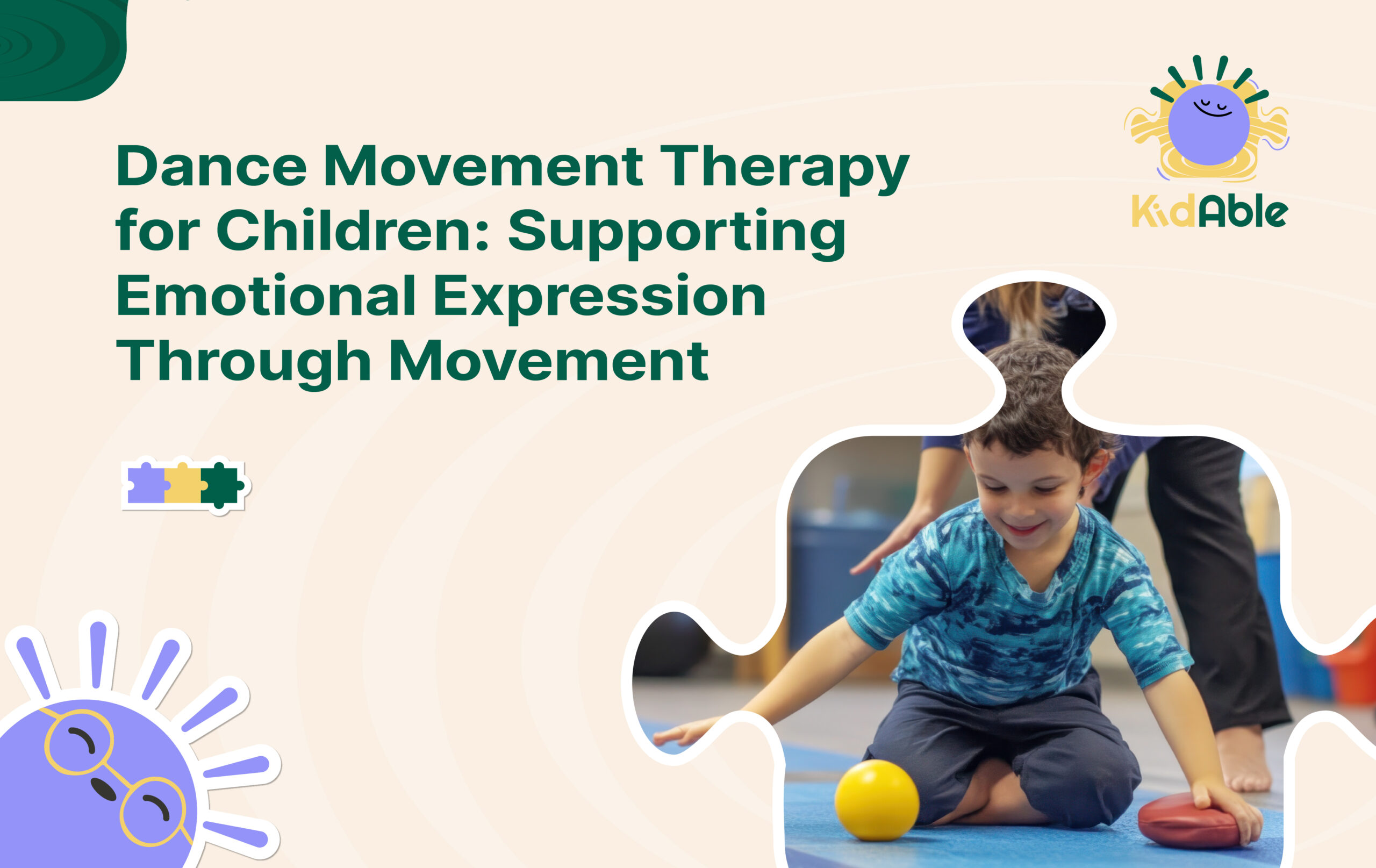
When a child cannot find the right words, their body often speaks first. A tightened shoulder. A restless sway. A sudden leap across the room. For many children, movement is not just play; it is communication. Dance movement therapy for children honours this truth. It recognises that feelings live in the body and that through safe, guided movement, children can explore, release, and understand their inner world with dignity and care.
Key Takeaways
- Dance movement therapy for children supports emotional expression through movement when words feel difficult.
- It is a non verbal, body based approach grounded in psychological and developmental research.
- Movement based therapy for children has been associated with improved emotional regulation in children and social connection.
- Child centered movement therapy adapts to each child’s pace, sensory profile, and developmental stage.
- Therapy through dance and movement can strengthen confidence building through movement and self awareness.
- Creative movement therapy offers structured yet flexible experiences guided by trained therapists.
- At KidAble, sessions are designed with clinical insight and deep emotional warmth to support movement therapy for emotional development.
Understanding Dance Movement Therapy in a Child’s World
Dance Movement Therapy for children is a form of psychotherapy that uses movement as its primary medium. Internationally, it is defined by professional bodies as the psychotherapeutic use of movement to promote emotional, social, cognitive, and physical integration. Research has documented measurable improvements in emotional awareness, social engagement, and behavioural flexibility among children who participate in structured movement therapy programs.
Children, especially between the ages of two and ten, often experience emotions in waves that feel bigger than their vocabulary. Neuroscientific studies show that emotional processing is deeply connected to sensorimotor systems in the brain. The limbic system, which processes feelings, works closely with bodily sensations. This is why a child might stomp when angry or curl inward when anxious. Movement is not separate from emotion; it is part of it.
In movement based therapy for children, a trained therapist observes patterns in posture, rhythm, spatial use, and energy. These patterns are gently mirrored or responded to, creating what therapists call attunement. Over time, this attuned movement dialogue can strengthen emotional insight and relational trust. It becomes a safe way for a child to say, “This is how I feel,” without being asked to explain more than they can.
The Science Behind Emotional Expression Through Movement
It is important to understand that emotional expression through movement is not simply a poetic idea. Developmental psychology and neuroscience provide strong foundations for this approach.
Research on embodied cognition suggests that cognitive and emotional processes are influenced by bodily states. When children engage in intentional movement, especially in a relational setting, neural pathways related to emotional regulation and self awareness can be strengthened. Studies involving children with developmental differences have shown that structured movement therapy for emotional development can support improvements in self regulation, peer interaction, and adaptive functioning.
The body stores experience. Trauma informed research explains that overwhelming events can be held somatically, meaning in muscles, breath patterns, and posture. For some children, talking directly about difficult experiences may feel unsafe or overwhelming. Non verbal therapy for children offers a gentler pathway. Through symbolic movement, rhythmic grounding, and safe relational mirroring, children can process feelings without being pressured to narrate them.
This is where body based therapy for kids becomes so meaningful. It respects the child’s nervous system. It works with breath, balance, tempo, and spatial awareness. When a child learns to slow their movements, match a rhythm, or transition from fast to gentle motion, they are also learning about emotional regulation in children in a deeply embodied way.
How Sessions Unfold in Child Centered Movement Therapy?
Parents often wonder what actually happens inside a session. The room does not resemble a stage. There are no spotlights, no performance expectations. Instead, there is open space, carefully chosen props, music used with intention, and a therapist whose presence is calm and attentive.
A session of therapy through dance and movement usually begins with grounding. The therapist may invite the child to notice their feet on the floor or the rhythm of their breath. From there, movement themes gently emerge. A child might explore strong movements and soft movements, large shapes and small shapes, fast and slow rhythms. These contrasts support emotional differentiation. Strong might connect to anger. Small might connect to shyness. Fast might echo excitement.
In creative movement therapy, improvisation plays a central role. If a child repeatedly circles the room, the therapist may join in, matching the rhythm. This mirroring communicates safety and understanding. Over time, the therapist may introduce small variations, inviting flexibility. Perhaps the circle becomes a spiral. Perhaps the pace shifts. These subtle expansions encourage adaptability without forcing change.
For children who experience sensory sensitivities or neurodevelopmental differences, sessions are carefully structured. Lighting, sound levels, and tactile materials are thoughtfully chosen. This is what makes it truly child centered movement therapy. The environment adapts to the child, not the other way around.
Importantly, the therapist continually observes emotional cues. A sudden drop in energy may signal fatigue or overwhelm. A burst of energy may signal excitement or anxiety. The session responds in real time. In this way, movement therapy for emotional development becomes a living conversation.
Confidence Building Through Movement and Social Growth
Children often discover a quiet sense of pride when they realise their movements matter. This is where confidence building through movement becomes visible. When a therapist mirrors a child’s gesture with respect, the message is simple yet powerful; you are seen.
Research exploring group based Dance movement therapy for children has found improvements in peer interaction skills. When children move together in rhythm or shared patterns, they practise turn taking, spatial awareness, and empathy. Synchronised movement has been linked in scientific literature to increased feelings of social connection. Even young children begin to sense that they are part of something harmonious.
For children who struggle with verbal expression, non verbal therapy for children can reduce the pressure to perform linguistically. They can express frustration through stamping patterns, curiosity through exploratory gestures, or joy through expansive leaps. Over time, many children begin to translate these bodily experiences into words. The body leads; language follows.
In school settings, therapists have observed that children who engage in consistent movement based therapy for children may demonstrate improved classroom readiness. This can include better impulse modulation, increased ability to remain seated when required, and more flexible transitions between activities. These outcomes are not accidental. They are rooted in the development of internal rhythm and self awareness cultivated through therapy through dance and movement.
Supporting Children with Diverse Emotional and Developmental Needs
Dance therapy for children is used across a wide range of developmental contexts. It has been integrated into programs for children on the autism spectrum, children experiencing attention differences, and those navigating anxiety or mood related traits. Clinical observations and controlled studies suggest that rhythmic movement and relational attunement can enhance joint attention, emotional reciprocity, and self soothing strategies.
For children with trauma histories, body based therapy for kids provides an avenue to reconnect with bodily sensations in a controlled and supportive way. Rather than asking a child to recount distressing memories, the therapist focuses on present moment movement. Gentle rocking, grounding steps, and breath synchronisation can restore a sense of safety in the body.
In cases where children experience intense emotional waves, movement therapy for emotional development can introduce structured sequences that gradually build tolerance for strong sensations. A child might practise moving from high energy jumps to slow stretches. This physical transition mirrors the emotional shift from intensity to calm.
It is important to clarify that creative movement therapy is not a replacement for medical or psychiatric care when those are required. Instead, it can complement speech therapy, occupational therapy, counselling, and educational support plans. Multidisciplinary collaboration ensures that the child’s needs are addressed holistically.
The Role of KidAble in Nurturing Emotional Expression Through Movement
At KidAble, sessions are guided by trained professionals who understand developmental psychology, sensory processing, and attachment theory. The space is intentionally designed to feel warm, predictable, and inviting. Before sessions begin, caregivers are gently invited to share their observations. This collaboration ensures that child centered movement therapy truly reflects the child’s lived experience. Within the studio, therapists integrate music thoughtfully, drawing on rhythms that support regulation. Slow, steady beats can calm an over activated nervous system. Playful tempos can invite engagement from a withdrawn child. Each choice is made with clinical intention.
Conclusion
Children deserve spaces where their feelings are welcomed in every form. Through dance movement therapy, supported by evidence informed practice and delivered with warmth, emotional exploration becomes safe and meaningful. At KidAble, body based therapy for kids is offered with patience, skill, and deep respect for each child’s individuality. Over time, movement therapy for emotional development can nurture steadiness, self trust, and genuine emotional regulation in children, allowing them to grow into their fullest selves.
FAQs
Is Dance Movement Therapy for children suitable for very young children?
Yes, Dance Movement Therapy for children can be thoughtfully adapted for toddlers and preschoolers. At these ages, movement is already their primary language. Sessions focus on sensory exploration, rhythm, and caregiver attunement. Therapists use simple, repetitive patterns to support early emotional expression through movement and foundational emotional regulation in children.
How is movement based therapy for children different from regular dance classes?
Movement based therapy for children is clinical and relational. The therapist observes emotional themes within movement and responds therapeutically. There is no expectation of perfect steps. The focus remains on therapy through dance and movement as a pathway to insight, regulation, and connection.
Can non verbal therapy for children really support emotional growth?
Yes, non verbal therapy for children can significantly support emotional growth, especially for those who struggle to articulate feelings. Through structured creative movement therapy and carefully guided child centered movement therapy, children learn to identify, tolerate, and transform emotional states in embodied ways.
How long does it take to see changes through movement therapy for emotional development?
The timeline varies for each child. Some families notice small shifts in awareness and calmness within a few weeks. More sustained changes in confidence building through movement and relational skills may unfold over several months of consistent sessions.