
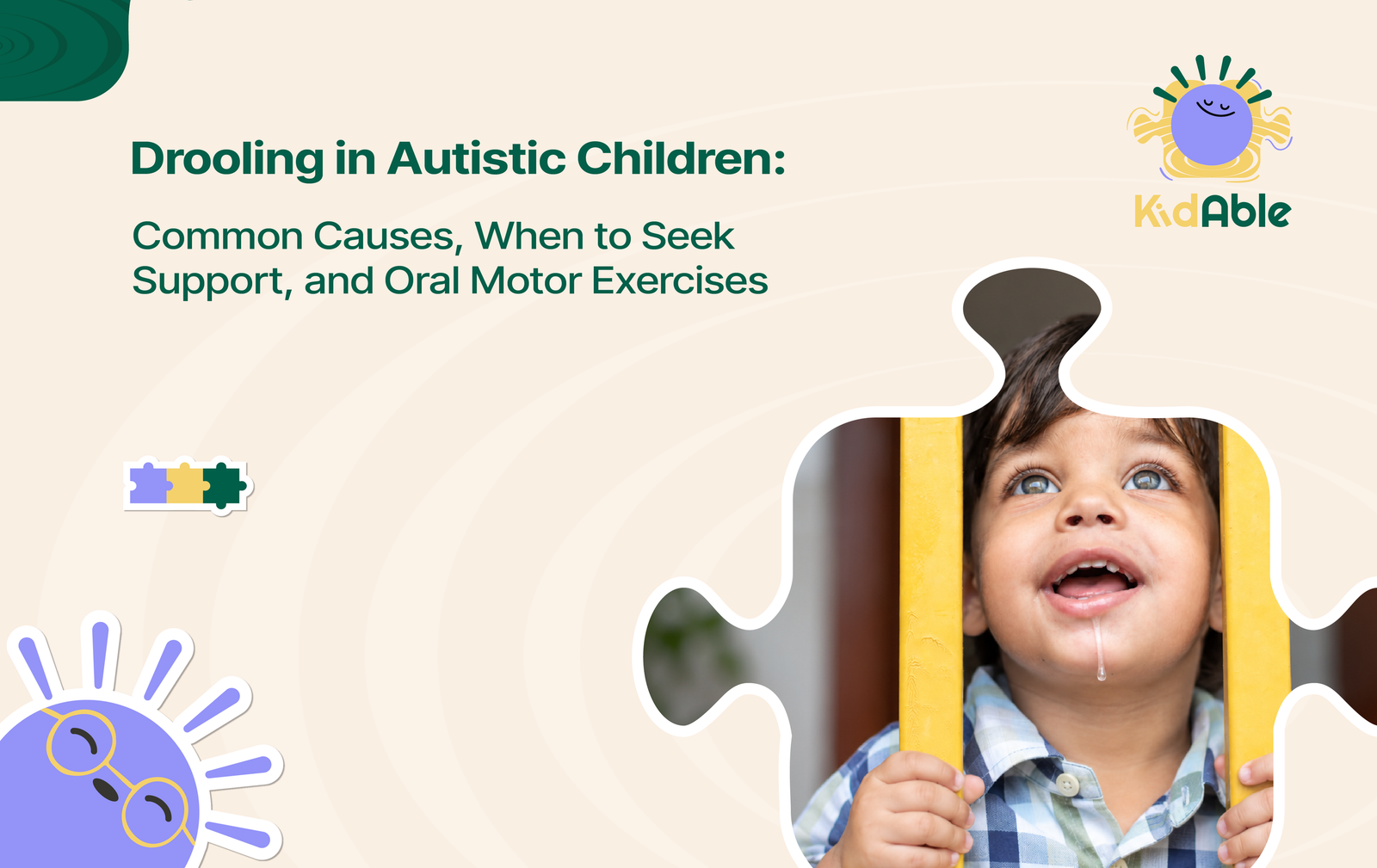
Drooling is a normal part of early development. Babies drool while teething, exploring objects with their mouths, and learning to control the muscles involved in eating and speaking. For most children, drooling reduces steadily as oral motor skills mature. For some autistic children, however, drooling continues for longer than expected.
Parents noticing drooling in autism often wonder whether it is related to their child’s diagnosis, whether it will improve, and what they can do at home. Understanding the possible reasons behind persistent drooling, and knowing when to involve a professional, can make the next steps feel more manageable. Approaches such as oral motor exercises for drooling may form one part of support, ideally guided by a therapist who understands the child’s individual profile.
Key Takeaways
- Drooling is common in infancy and usually reduces between 18 months and four years of age as oral motor control develops.
- Drooling in autism can be linked to low oral muscle tone, reduced oral sensory awareness, open mouth posture, mouth breathing, or differences in swallowing frequency.
- Oral motor exercises for drooling may be recommended as part of a broader plan, although evidence for some exercises is still developing.
- Oral motor exercises for autism work best when they respect the child’s sensory preferences and are built into playful daily routines.
- At KidAble in Gurugram, speech and language therapy and occupational therapy can assess oral motor and sensory factors together.
Is Drooling Common in Autistic Children?
Drooling, sometimes called sialorrhoea, is not a diagnostic feature of autism. Many autistic children never experience persistent drooling. However, some autistic children do continue to drool beyond the age at which it typically reduces.
This is often connected to differences in oral motor development, sensory processing, or muscle tone that occur more frequently in autistic children and in children with other developmental differences. Understanding the reason matters, because the most appropriate support depends on what is contributing to the drooling.
Common Causes of Drooling in Autism
There is rarely a single cause of drooling in autism. Several factors may work together.
Low oral muscle tone
Some children have reduced muscle tone in the lips, cheeks, tongue, and jaw. This can make it more difficult to keep the lips closed at rest, contain saliva, or manage saliva efficiently.
Reduced oral sensory awareness
Sensory processing differences are common in autistic children. Some children may not notice saliva collecting in or around their mouth, so they do not swallow or wipe their mouth as often as expected. Others may seek oral input by mouthing objects frequently, which can increase saliva.
Open mouth posture
A child who rests with their mouth open is more likely to drool. Open mouth posture can be linked to muscle tone, habit, or difficulty breathing through the nose.
Mouth breathing and nasal congestion
Enlarged tonsils or adenoids, allergies, or frequent colds can make nasal breathing more difficult. When a child breathes through their mouth, lip closure is reduced and drooling may increase. These factors are best checked by a paediatrician or ENT specialist.
Swallowing frequency and coordination
Drooling is often less about producing too much saliva and more about not swallowing it often or efficiently enough. Differences in oral motor coordination can affect how regularly a child swallows.
Other contributing factors
Dental issues, teething, certain medications, and periods of intense concentration can also increase drooling. Some children drool more when they are focused, tired, or unwell.
How Drooling Can Affect Everyday Life
Persistent drooling can affect skin health, as constant moisture can cause irritation around the mouth and chin. It can mean frequent clothing changes, and the underlying oral motor differences may also affect chewing, swallowing, and speech clarity. Older children may become aware of drooling and feel self conscious.
Approaching drooling calmly and without judgement is important. Children should never feel that drooling is something to be embarrassed about.
When to Seek Support for Drooling
It may be useful to seek professional guidance if:
- Drooling continues frequently beyond around four years of age
- Drooling is heavy enough to soak clothing regularly
- There are signs of skin irritation or infection
- Your child also has difficulty chewing, swallowing, or managing food textures
- Your child frequently breathes through their mouth or snores
- Drooling is affecting speech, confidence, or participation
A speech and language therapist or occupational therapist can assess oral motor skills and sensory responses. A paediatrician, dentist, or ENT specialist may also be involved to check for medical or structural contributors.
Oral Motor Exercises for Drooling
Oral motor exercises for drooling aim to build awareness, strength, and coordination of the lips, tongue, cheeks, and jaw. Research on oral motor exercises is still developing, and their effectiveness varies between children. They are most useful when chosen through individual assessment and combined with sensory awareness and functional activities such as eating and drinking.
The activities below are examples families may explore under the guidance of a therapist.
Lip closure activities
Holding a lightweight object, such as a paper strip, between the lips for a few seconds, making “mmm” sounds during songs, and pressing the lips together to make kisses or popping sounds all encourage lip awareness and closure.
Blowing activities
Blowing bubbles, blowing cotton balls across a table, or using whistles and simple wind instruments require lip rounding and controlled breath, building both lip strength and awareness.
Straw drinking
Drinking thicker liquids, such as smoothies or yoghurt drinks, through a straw encourages lip closure, cheek activation, and suction. Shorter straws can be easier to start with.
Tongue movement games
Licking yoghurt from the lips, moving the tongue side to side while copying an adult in a mirror, and reaching the tongue to the corners of the mouth support tongue mobility and awareness.
Chewing activities
Chewing appropriate textures, or using chewy tools recommended by a therapist, can support jaw strength and stability. Food textures should always be chosen safely and according to the child’s eating skills.
Oral Motor Exercises to Decrease Drooling Through Awareness
Many children benefit from oral motor exercises to decrease drooling that focus on awareness as much as strength.
- Swallow reminders: gentle verbal or visual cues to swallow, such as a picture card or a friendly phrase
- Wiping routines: teaching the child to wipe their own mouth with a wristband or cloth, which builds sensory awareness and independence
- Mirror play: looking in a mirror while closing lips or swallowing makes oral movements more visible and interesting
- Sensory input before activities: brief oral sensory activities, such as using a textured toothbrush, can increase oral awareness
Consistency matters more than duration. Short, playful practice built into daily routines is often more sustainable than long sessions, and oral motor exercises to decrease drooling are most effective when they are repeated naturally across the day.
Oral Motor Exercises for Autism: Making Them Work for Your Child
Oral motor exercises for autism need to respect the child’s sensory preferences and motivation. Some autistic children find certain textures, tastes, or touch around the mouth uncomfortable. Pushing through discomfort can make the child more resistant.
Useful principles include starting with activities the child already enjoys, introducing new sensations gradually and predictably, using visual supports to explain what will happen, keeping sessions short, and linking practice to the child’s interests, such as blowing bubbles towards a favourite toy. A therapist can adapt oral motor exercises for autism to suit the child’s sensory profile, communication style, and developmental level.
Other Approaches That May Be Considered
For some children, especially when drooling is severe or persists despite therapy, a medical team may discuss other options, including medications or other medical interventions. These decisions should always be made with a qualified doctor who can weigh potential benefits and side effects for the individual child.
How KidAble Supports Children and Families in Gurugram
At KidAble in Gurugram, support begins with understanding the whole child rather than focusing only on the drooling itself.
Speech and language therapy can assess oral motor skills, lip and tongue control, swallowing, and their connection to speech and eating. Occupational therapy can explore sensory processing, oral sensory awareness, and how these affect everyday participation.
Depending on the child’s profile, support may include speech and language therapy, occupational therapy, early intervention, behavioural and developmental support, and parent coaching so that strategies can be practised consistently at home.
Conclusion
Drooling in autism is not a feature of autism itself, but it can occur when factors such as low oral muscle tone, reduced sensory awareness, open mouth posture, or mouth breathing affect how saliva is managed.
Oral motor exercises for drooling, sensory awareness strategies, and supportive routines can form part of a thoughtful plan, particularly when guided by a therapist who understands the child’s sensory and developmental profile. Medical review is also important when breathing, dental, or structural factors may be involved.
At KidAble in Gurugram, multidisciplinary assessment allows families to understand what is contributing to their child’s drooling and to build a supportive, individualised plan.
FAQs
Is drooling in autism common?
Drooling is not a diagnostic feature of autism, but some autistic children continue to drool for longer than expected because of differences in oral muscle tone, sensory awareness, or oral motor coordination.
At what age should drooling stop?
Drooling usually reduces between 18 months and four years of age. Frequent drooling beyond around four years is worth discussing with a professional.
Do oral motor exercises for drooling work?
Oral motor exercises may support lip closure, tongue control, and awareness for some children. Evidence is still developing, so exercises are most useful when chosen through individual assessment and combined with other strategies.
What are some oral motor exercises for autism?
Examples include blowing bubbles, straw drinking, lip closure games, tongue movement games in a mirror, and appropriate chewing activities, adapted to the child’s sensory preferences.
Who should I consult about my child’s drooling?
A speech and language therapist or occupational therapist can assess oral motor and sensory factors. A paediatrician, dentist, or ENT specialist can check for medical or structural causes.