
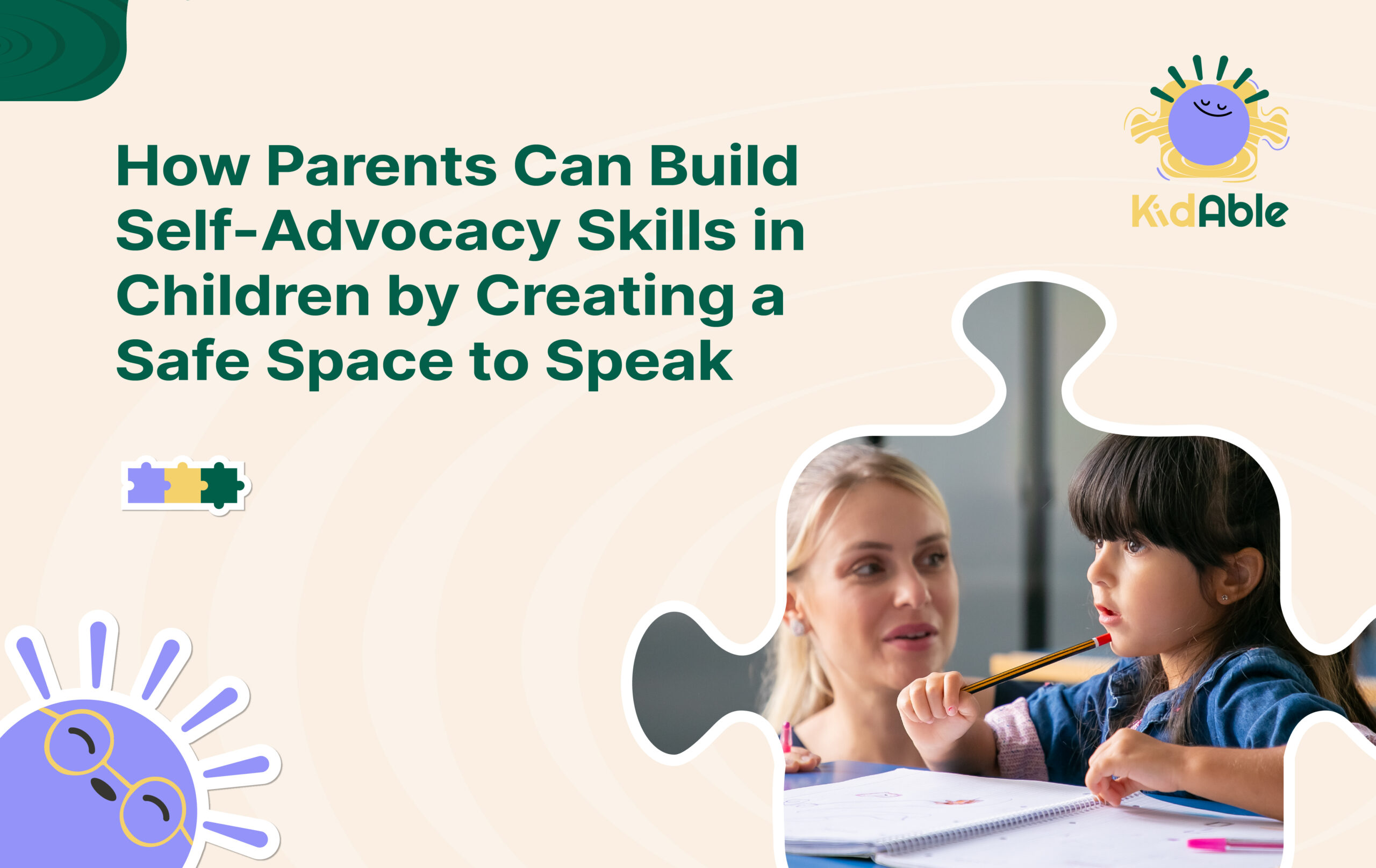
There is something deeply powerful about a child who can say, softly and clearly, “This is what I need.” That ability does not appear suddenly in adolescence. It grows quietly in early childhood, shaped by daily conversations, small permissions, and the feeling of being heard without judgment. When families begin to intentionally nurture self advocacy skills in children, they are not encouraging defiance or independence without guidance. They are nurturing self awareness, emotional literacy, and the confidence to participate in one’s own life.
Key Takeaways
- Self advocacy begins in early childhood through everyday conversations and emotionally safe relationships.
- Self advocacy skills in children are built through co-regulation, modelling language, and respectful listening.
- How to teach self advocacy to children starts with helping them name feelings, preferences, and boundaries.
- Thoughtful parent strategies for child self advocacy strengthen communication and long term resilience.
- Helping children speak up for themselves requires patience, attuned responses, and consistent emotional safety.
- Building confidence in children’s voice is closely connected to secure attachment and predictable routines.
- Creating a safe space for children to communicate supports emotional regulation and healthy autonomy.
- Encouraging children to express their needs at home lays the foundation for confident participation in school and community settings.
- Supporting children’s communication at home improves problem solving, emotional regulation, and social understanding.
Why Self Advocacy Matters in Childhood?
When we speak about self advocacy skills in children, we are referring to a child’s ability to understand their own feelings, needs, strengths, and limits, and to communicate them in ways that are respectful and clear. Developmental research consistently shows that children who can identify their emotions and express their needs tend to demonstrate stronger social competence, better emotional regulation, and greater academic engagement over time.
Self advocacy is closely tied to executive functioning and emotional regulation. A child who can say, “I need a break,” is practicing self monitoring. A child who can say, “That noise feels too loud for me,” is showing sensory awareness. These are not simply communication milestones. They are signs of a nervous system that is learning to recognise internal signals and respond adaptively.
For children who experience sensory differences, learning differences, or developmental variations, the importance of helping children speak up for themselves becomes even more meaningful. When adults consistently interpret every signal for a child, even with loving intentions, the child may not have enough opportunities to practice expressing preferences. Over time, this can influence confidence. On the other hand, when a child feels that their words carry weight, their sense of agency grows steadily.
The goal is not perfection in expression. The goal is participation. Self advocacy allows children to participate in conversations about their routines, their comfort, their boundaries, and their learning. It protects emotional wellbeing and nurtures long term resilience.
Understanding What Self Advocacy Looks Like at Different Ages
Parents often wonder how to teach self advocacy to children when their child is still very young. It helps to remember that self advocacy begins long before complex language emerges. A toddler who turns their head away from a spoon is communicating a boundary. A preschooler who says, “I don’t like that,” is beginning to understand preference. These early expressions deserve respectful acknowledgment.
In early childhood, self advocacy may look like choosing between two clothing options, requesting assistance with a task, or telling a caregiver that something feels uncomfortable. During primary school years, it may expand into asking for clarification from a teacher, requesting extra time, or expressing disagreement respectfully. In adolescence, self advocacy includes articulating goals, discussing accommodations, and navigating social boundaries.
The process is developmental. It unfolds gradually. When adults adapt expectations according to age and emotional maturity, building confidence in children’s voice becomes a natural extension of everyday family life rather than a formal lesson.
Creating a Safe Emotional Environment at Home
At the heart of creating a safe space for children to communicate is emotional safety. Emotional safety means that a child trusts they will not be dismissed, shamed, or hurried when expressing their inner experience. Neuroscience reminds us that children speak most openly when their nervous system feels calm and connected. When stress is high, expressive language becomes more difficult.
A safe emotional environment is built through predictable responses. When a child says, “I feel upset,” and the adult replies with calm curiosity instead of correction, the message is clear. Your feelings are allowed here. When a child expresses a preference that cannot be granted, and the adult explains the boundary gently while acknowledging the feeling, the child learns that expression is safe even when outcomes vary.
Tone matters. Body language matters. The pace of conversation matters. Pausing before responding allows a child’s words to land. Reflecting back what you heard, such as “You’re feeling tired and want a break,” validates the internal experience. This is a foundational part of supporting children’s communication at home.
Families sometimes worry that validating emotions will encourage defiance. Research in attachment theory suggests the opposite. When children feel heard, they tend to cooperate more readily because the relationship feels secure. Emotional safety strengthens trust, and trust strengthens willingness to engage.
Language as a Tool for Self Advocacy
Children cannot express what they cannot name. One of the most practical parent strategies for child self advocacy is expanding emotional and sensory vocabulary in gentle, everyday ways. Instead of asking, “Are you okay?” caregivers can offer descriptive language. “You look frustrated.” “It seems like that noise feels uncomfortable.” This gives children words they can later use independently.
Reading stories that highlight characters expressing preferences, discussing feelings after social interactions, and modelling phrases such as “I need a moment” or “I feel overwhelmed” provide templates for communication. Over time, children internalise this language. They begin to use it spontaneously.
When thinking about how to teach self advocacy to children, modelling is more powerful than instruction. Children observe how adults handle their own needs. If a parent says, “I’m feeling tired; I’m going to rest for a few minutes,” the child witnesses self advocacy in action. It becomes normalised rather than dramatic.
Encouraging children to practise simple statements such as “I don’t understand yet,” or “Can you explain that again?” prepares them for school settings. These small scripts can reduce anxiety and foster independence. This is part of encouraging children to express their needs in ways that feel manageable.
Balancing Boundaries with Expression
A common concern is that promoting voice may reduce respect for limits. In reality, self advocacy and boundaries coexist beautifully. A child can express disappointment while still accepting a decision. Adults play a vital role in demonstrating that expression does not automatically change every outcome, yet it is always welcomed.
For example, if a child says they do not want to attend a family gathering because it feels overwhelming, the adult can acknowledge the feeling and collaborate on supportive strategies. Perhaps the child can take short breaks during the event. Perhaps they can bring a familiar comfort item. This approach honours the voice while maintaining family commitments.
This balance is essential in helping children speak up for themselves without creating confusion about expectations. When children see that their input influences planning, even within boundaries, their confidence grows steadily.
Supporting Self Advocacy in Children with Diverse Needs
For children who experience communication differences, sensory sensitivities, attention differences, or developmental delays, self advocacy skills in children may require intentional scaffolding. Visual supports, emotion charts, social narratives, and role play can gently strengthen expressive abilities.
Occupational therapy research highlights the connection between sensory awareness and self advocacy. A child who recognises early signs of sensory overload can request regulation strategies before distress escalates. Speech and language therapy literature emphasises pragmatic language skills, such as turn taking and perspective taking, as foundations for effective advocacy.
Collaboration between caregivers and professionals enhances outcomes. When therapists share strategies that families can use at home, supporting children’s communication at home becomes consistent across environments. Consistency supports learning because children receive the same message about voice and participation in multiple contexts.
Parents may sometimes feel uncertain about whether their child’s communication patterns reflect temperament or developmental traits. Seeking guidance early can provide reassurance and direction. Early intervention consistently demonstrates improved long term outcomes in communication, social participation, and self regulation.
The Role of Schools and Community
While the home environment is foundational, children practise advocacy in broader social spaces as well. Educators who invite questions, offer choices in learning tasks, and encourage reflective dialogue contribute meaningfully to building confidence in children’s voice. When a teacher responds positively to a child requesting clarification, the child learns that their voice belongs in academic settings.
Parents can prepare children for school interactions by rehearsing simple advocacy phrases in calm moments. They might practise saying, “I need more time,” or “That feels confusing.” These rehearsals are not rigid drills. They are gentle preparations. This is another practical way of encouraging children to express their needs beyond the home.
Community settings such as extracurricular classes and family gatherings provide additional opportunities. Each interaction becomes a small practice field. Over time, these repeated experiences strengthen internal confidence.
When Children Hesitate to Speak
Some children are naturally reserved. Others may have learned that speaking leads to dismissal. If a child hesitates to express needs, the first step is curiosity rather than correction. Asking open invitations such as, “Would you like to tell me more?” creates space without pressure.
Silence can also communicate safety when words are not ready. Sitting nearby, maintaining warm eye contact, and offering reassurance through presence supports gradual expression. In moments of emotional intensity, fewer words often feel more manageable.
It is important to notice patterns. If a child consistently avoids expressing needs in certain environments, exploring those contexts gently can reveal useful insights. Thoughtful reflection forms part of comprehensive parent strategies for child self advocacy.
Patience is essential. Self advocacy grows through repetition, encouragement, and relational safety. It is less about performance and more about belonging.
The Kidable’s Approach
At Kidable, we understand that building self advocacy skills in children begins with relationships before strategy. Our developmental services are designed to gently strengthen communication, emotional regulation, and self awareness through evidence informed, child centred practices. Whether a child is learning to name feelings, request sensory support, or participate more confidently in school routines, our therapists work closely with families to ensure consistency across environments. We believe in creating a safe space for children to communicate not only within sessions, but within homes and classrooms, so that every child feels steady, capable, and heard.
Conclusion
If you pause for a moment and think about your child’s day, you may notice small openings where the voice can grow. A choice about clothing. A conversation about comfort. A reflection after school. These are not minor details. They are invitations.
By consistently encouraging children to express their needs, by patiently modelling language, and by intentionally supporting children’s communication at home, families cultivate lasting resilience. The journey does not require perfection. It asks for presence. Self advocacy begins in the quiet spaces where a child feels seen. And from there, it grows.
FAQs
What are self advocacy skills in children and why are they important?
Self advocacy skills in children refer to a child’s ability to recognise their feelings, preferences, strengths, and boundaries and communicate them respectfully. These skills support emotional regulation, social participation, academic engagement, and long term resilience. Children who practise self advocacy early often demonstrate greater confidence and independence over time.
How to teach self advocacy to children in everyday life?
Understanding how to teach self advocacy to children begins with modelling respectful communication, expanding emotional vocabulary, offering structured choices, and responding to expressions with calm acknowledgment. Daily conversations, story discussions, and collaborative problem solving create natural opportunities for practice.
What are practical parent strategies for child self advocacy?
Effective parent strategies for child self advocacy include validating emotions, setting predictable boundaries, rehearsing simple communication phrases, and collaborating with educators or therapists when needed. Consistency across environments strengthens learning and confidence.
How can I support my child if they struggle to speak up?
If a child hesitates, focus on creating a safe space for children to communicate through warmth and patience. Reduce pressure, offer gentle prompts, and consider professional guidance if communication challenges persist. Early support can strengthen both expression and emotional wellbeing.
Why is supporting children’s communication at home so important?
Supporting children’s communication at home lays the foundation for advocacy in school and community settings. When children experience respect and responsiveness within the family, they internalise the belief that their voice matters everywhere.