
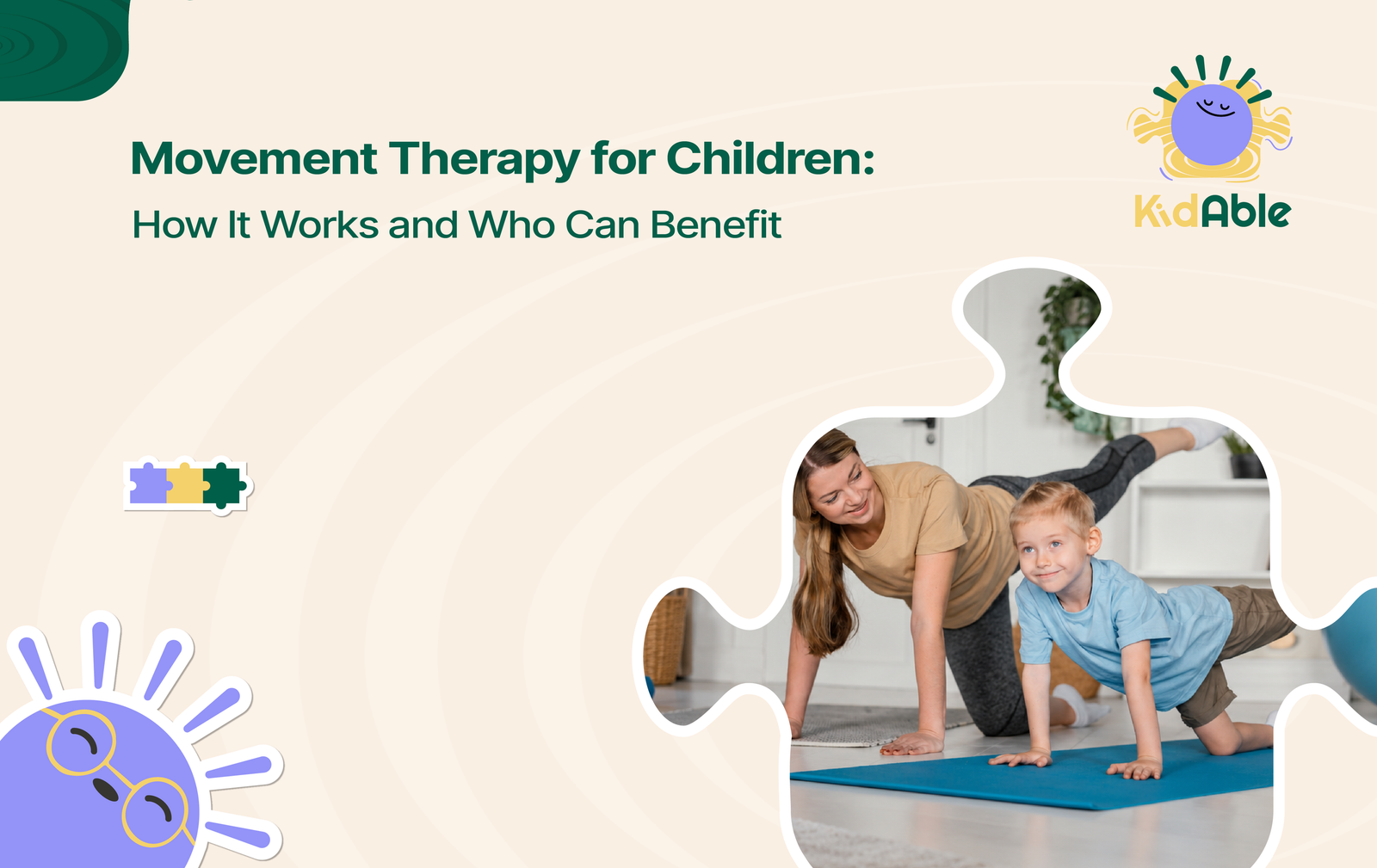
Children learn about themselves and the world through movement. Long before they can explain how they feel, they rock, jump, spin, climb, crawl, and dance. Movement supports body awareness, coordination, regulation, communication, and connection with others.
For children who find some of these areas more challenging, movement therapy for children uses structured and playful movement to support development. Families of autistic children are increasingly exploring movement therapy for autism, including dance movement therapy and movement-based approaches within occupational therapy. Understanding what these approaches involve, what the evidence currently shows, and which children may benefit can support families in making informed decisions.
Key Takeaways
- Movement therapy for children uses intentional movement to support motor skills, body awareness, regulation, communication, and social engagement.
- Movement therapy for autism may support sensory regulation, motor planning, imitation, and shared attention, although research is still developing.
- Research on dance movement therapy and autism suggests possible benefits for body awareness and social connection, with most studies being small.
- Movement-based approaches are often most meaningful when integrated with occupational therapy, speech and language therapy, and parent guidance.
- At KidAble in Gurugram, multidisciplinary assessment can identify whether movement-based support may suit a child’s profile.
What Is Movement Therapy for Children?
Movement therapy is a broad term. It can refer to several approaches that use movement intentionally to support a child’s development and wellbeing.
Dance movement therapy (DMT) is a form of psychotherapy that uses movement and dance to support emotional, social, cognitive, and physical integration. It is facilitated by trained practitioners and often focuses on expression, connection, and body awareness.
Movement-based occupational therapy uses activities such as swinging, climbing, jumping, balancing, and obstacle courses to support sensory processing, motor planning, coordination, and regulation.
Physiotherapy-based movement work may focus more specifically on strength, balance, posture, and gross motor skills.
When families search for movement therapy for kids, they may come across any of these approaches. The right fit depends on what the child needs support with, which is why assessment should come before choosing a programme.
How Movement Therapy Works
Movement therapy works on the understanding that the body and brain are closely connected. When children engage in purposeful movement, they receive sensory feedback that informs body awareness, balance, and coordination.
Sensory regulation
Movement provides strong sensory input through the vestibular system, which senses balance and motion, and the proprioceptive system, which senses body position and effort. Activities such as swinging, jumping, pushing, or pulling can support some children in becoming calmer, more alert, or more organised, depending on their sensory profile.
Motor planning and coordination
Many children, including autistic children, find motor planning more challenging. This is the ability to plan, sequence, and carry out unfamiliar movements. Movement activities practise these skills in playful and achievable steps.
Body awareness
Understanding where the body is in space supports everyday tasks such as navigating a classroom, sitting comfortably, dressing, and playing with other children.
Communication and connection
Movement can be a powerful non-verbal language. Copying movements, taking turns, moving in rhythm with another person, and responding to music can support imitation, joint attention, and social engagement.
Emotional expression
For some children, movement offers a way to express emotions that are difficult to put into words. A child who cannot yet say “I feel frustrated” may be able to show it through stomping, pushing, or a fast rhythm, and then gradually learn calmer ways to move and respond.
Movement Therapy for Autism: What the Research Shows
Research into movement therapy for autism is growing, but it is important to describe the evidence honestly.
Studies of movement-based and physical activity interventions for autistic children have reported improvements in areas such as motor skills, social interaction, and behavioural regulation. However, many studies are small, use different methods, and vary in how they measure outcomes. The findings are promising but should be interpreted with appropriate caution.
Movement is also a meaningful part of occupational therapy approaches that address sensory processing and motor planning. Here, movement is not usually a stand-alone therapy but one tool used within individualised goals. For many families, this is the most practical way to access movement therapy for autism: as part of a broader plan rather than as a separate programme.
Dance Movement Therapy and Autism
The relationship between dance movement therapy and autism has been explored in several studies. One frequently discussed approach is mirroring, where the therapist and participant reflect each other’s movements. Mirroring is thought to support imitation, shared attention, and a sense of being understood.
Some small studies, including research with young autistic adults, have reported improvements in body awareness, emotional wellbeing, and social engagement following mirroring-based dance movement interventions. Systematic reviews generally conclude that dance movement therapy shows promise for autistic people but that larger, higher-quality studies are needed.
For families, this means dance movement therapy may be worth considering as one part of support, especially for children who enjoy music and movement, rather than as a replacement for other evidence-based interventions.
Who Can Benefit From Movement Therapy for Children?
Movement therapy for children may be considered for children who:
- Have sensory processing differences, such as seeking or avoiding movement
- Find coordination, balance, or motor planning challenging
- Have difficulty with body awareness or posture
- Find it difficult to regulate energy levels, attention, or emotions
- Communicate more comfortably through action than words
- Find traditional seated therapy activities difficult to engage with
This may include autistic children, children with ADHD, children with developmental coordination disorder, children with developmental delays, and children experiencing emotional or behavioural challenges.
Movement therapy does not suit every child in the same way. Some children find certain types of movement overwhelming. A careful assessment ensures activities are matched to the child’s needs and comfort.
What Does a Movement Therapy Session Look Like?
Sessions vary depending on the approach and the child’s goals. A typical session of movement therapy for kids might include:
- A predictable warm up, such as a familiar song with actions
- Sensory-rich activities, such as swinging, jumping, or crawling through tunnels
- Motor planning tasks, such as obstacle courses or copying sequences of movements
- Turn taking and imitation games with the therapist or a peer
- A calming activity to support regulation before the session ends
In dance movement therapy, sessions may also include free movement, mirroring, rhythm-based activities, and opportunities to explore feelings through movement.
Movement at Home: Supporting Daily Regulation
Movement does not have to happen only in therapy. Families can build movement into daily routines through short movement breaks between homework tasks, animal walks such as bear crawls or frog jumps, dancing together to favourite songs, outdoor play on swings and climbing frames, and heavy work activities such as carrying shopping bags or pushing a laundry basket.
A therapist can recommend specific activities based on whether a child needs movement that is calming or alerting, so home routines support the same goals as therapy sessions.
Finding Movement Therapy for Children in Gurgaon
Families looking for movement therapy for children in Gurgaon may find different services using similar terms. It can be useful to ask:
- What type of movement-based approach is used, and what training do the practitioners have?
- How is the child assessed before goals are set?
- How does movement support connect with communication and daily living skills?
- How are parents involved, and what can be continued at home?
- How is progress reviewed?
The best option for movement therapy for children in Gurgaon is usually one where movement is part of an individualised, assessment-led plan rather than a one-size-fits-all class.
How KidAble Supports Children and Families in Gurugram
At KidAble in Gurugram, support begins with understanding the whole child rather than choosing an approach before understanding the need.
A multidisciplinary assessment can look at sensory processing, motor development, communication, behaviour, emotional regulation, and everyday participation together. Occupational therapy can incorporate purposeful, movement-based activities to support sensory regulation, motor planning, coordination, and body awareness where these are relevant to the child’s goals.
Depending on the child’s profile, support may also include speech and language therapy, behavioural and developmental intervention, psychological services, special education, early intervention, and parent coaching.
Conclusion
Movement therapy for children recognises that movement is a natural and powerful part of development. For many children, structured and playful movement can support sensory regulation, motor skills, body awareness, communication, and connection.
Research into movement therapy for autism and dance movement therapy is promising, though still developing. Movement-based approaches are often most meaningful when they form part of a broader, individualised plan.
At KidAble in Gurugram, multidisciplinary assessment allows families to understand whether movement-based support could suit their child and how it connects with their overall development.
FAQs
What is movement therapy for children?
Movement therapy for children uses intentional movement, play, and sometimes dance to support motor skills, sensory regulation, body awareness, emotional expression, and social engagement.
Is movement therapy for autism effective?
Research suggests movement-based approaches may support motor skills, regulation, and social engagement in autistic children, but many studies are small. It is most useful as part of an individualised support plan.
What is the link between dance movement therapy and autism?
Dance movement therapy uses techniques such as mirroring and rhythm to support body awareness, imitation, and connection. Early research with autistic people shows promise, although more studies are needed.
At what age can children start movement therapy for kids?
Movement-based support can be adapted for young children as well as older children and teenagers. Activities are chosen based on the child’s developmental stage and needs.
Where can I find movement therapy for children in Gurgaon?
Families can look for services that offer assessment-led, movement-based support, often within occupational therapy. In Gurugram, KidAble’s multidisciplinary team can assess whether this approach suits a child’s needs.